
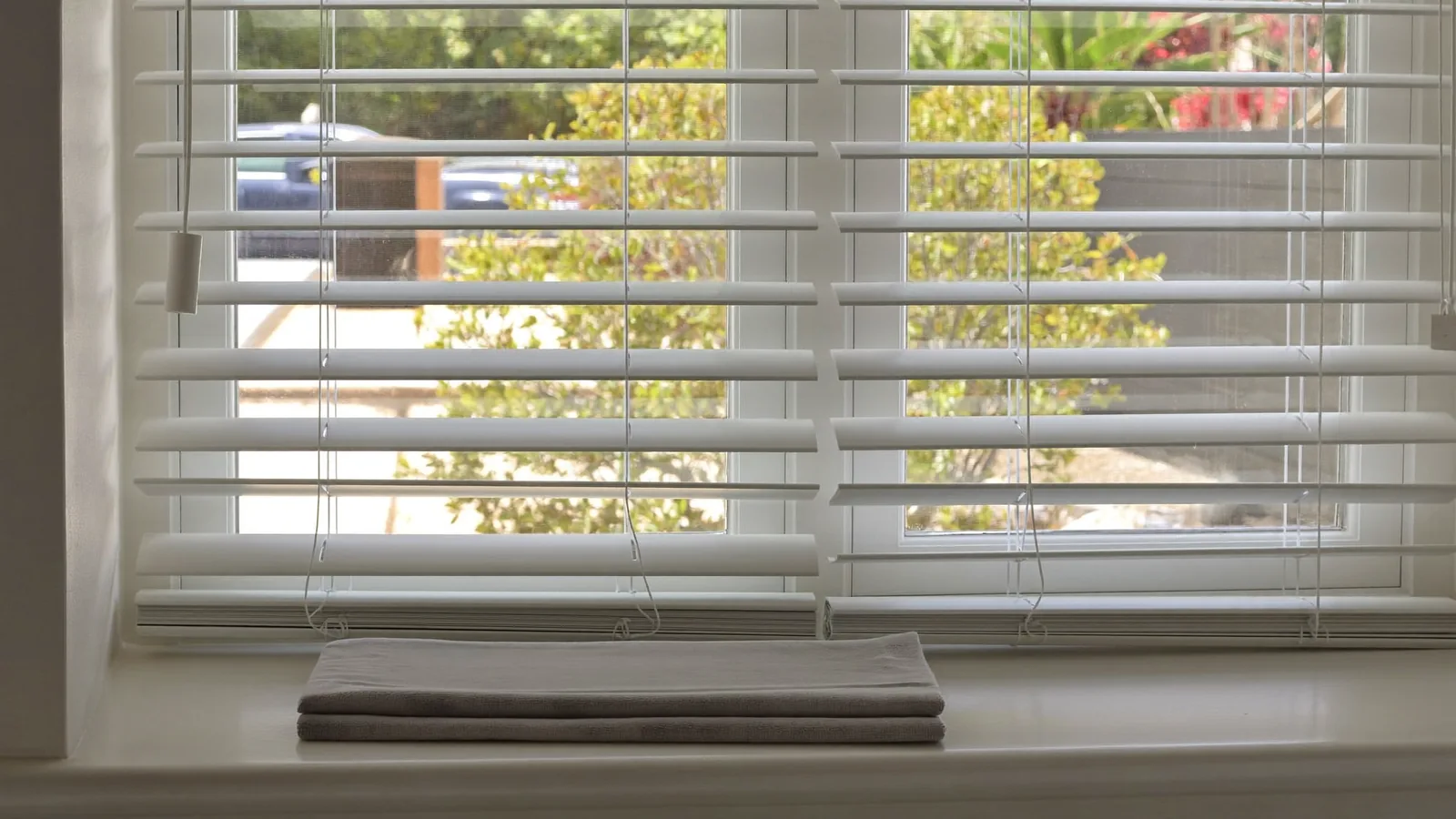
How to clean blinds safely comes down to one rule: dust them dry first, then spot-clean only what is left, using what the maker says is safe for your blind type. Most of the dust comes off without water. If you would rather hand it off, Ladybug’s deep cleaning includes detailed dusting of blinds, shutters and treatments.
This guide shows you how to dust, how to spot-clean by blind type, and when to leave a set of blinds to a professional.
Quick summary
- Start dry. Dust or vacuum with a brush attachment before you use any damp cloth.
- Find your blind type first: real wood, faux wood or vinyl, metal, or fabric. Each one has different limits.
- Hunter Douglas, a blind maker, says chemical solvents and scrubbing cleansers can damage blinds. Check your own maker’s care instructions before you use anything wet.
- Dust from the top down, so dust falls onto the parts you have not cleaned yet.
- Some jobs, such as ultrasonic cleaning, belong to a professional cleaning service.
What type of blinds do you have?
Look at the slats and the label or paperwork before you pick a method. The type decides what is safe.
- Real wood: stained or painted slats with a natural grain. Water, steam and moisture can harm them.
- Faux wood or vinyl: wood-look slats that feel smoother and more uniform. Hunter Douglas groups these as “alternative wood or vinyl” products.
- Metal or aluminum: metal slats. Press lightly.
- Fabric or cellular shades: soft coverings, including honeycomb shades. Some are treated to repel dust and dirt, so cleaning rules differ by product.
If you cannot tell, treat the blind as the most delicate type. Dry dusting is the starting point for all four.
How do you dust blinds the right way?
Lower the blinds all the way, tilt the slats almost fully closed, and dust with a soft, clean cloth, dust cloth or dusting mitt. That is Hunter Douglas’s own instruction for wood, faux wood and metal blinds. Then tilt the slats the other way and dust the second side.
Work from the top of the blind to the bottom. Here is a simple order:
- Lower the blinds to their full length.
- Tilt the slats almost all the way down.
- Dust from the top slat to the bottom slat with a soft cloth, dust cloth or dusting mitt.
- Tilt the slats the other way and repeat.
- Dust the top rail, the cords and the window sill last.
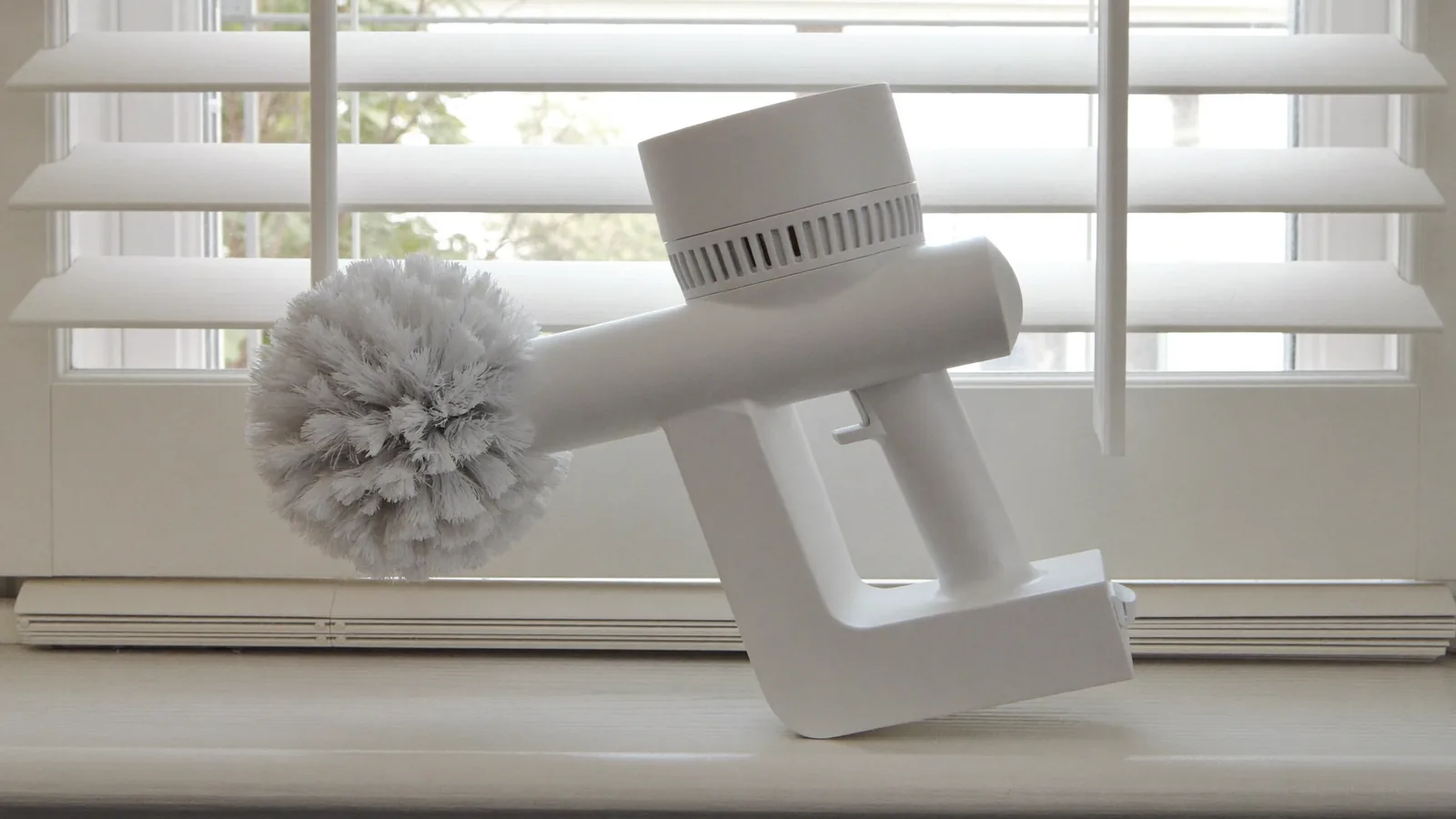
Hunter Douglas also says blinds may be vacuumed with a brush attachment. A hand-held vacuum with a brush attachment works well for a light pass. Go gently.
How to clean blinds by type
Match the method to the material, and stop at dry dusting if you are unsure.
Real wood blinds
Dust or vacuum with a brush attachment. Keep wood away from steam and extra moisture; Hunter Douglas says to protect fine wood products from steam, high-moisture areas, rain and sprinkler systems. Its guide also says chemical solvents and scrubbing cleansers are not recommended because they will damage the product. If a blind is stained, Hunter Douglas says to treat it periodically with lemon oil or another wood preservative, so read your own care guide first.
Faux wood and vinyl blinds
Dry dusting comes first here too. Hunter Douglas suggests a feather duster or microfiber cloth, a hand-held vacuum with a brush attachment, and wiping with dryer sheets to reduce static cling and help repel dust. It also says not to use abrasive cleaners or chemical solvents, because they will scratch or damage the surface.
Metal and aluminum blinds
Dust, then vacuum with a brush attachment. For marks, Hunter Douglas says to use an over-the-counter blinds cleaner with a soft cloth. Its guide describes soaking only for certain aluminum products, and it is not recommended for blinds with decorative tapes. Do not soak a blind unless your maker’s guide says that exact product can be soaked.
Fabric and cellular shades
Light, regular dusting is the main care for most shades, according to Hunter Douglas. Vacuum gently with a brush attachment, or use forced air, such as compressed air or a hair dryer, to dust the shade gently. For a spot, the maker suggests a soft cloth or sponge with warm water and mild detergent, blotted gently. Do not use a magnetic dusting mitt on light-dimming fabrics, because it can damage the backing.
Why do blinds get so dusty in Las Vegas?
Because dust settles on flat surfaces, and a set of slats has a lot of them. A quick floor clean never touches them. See our desert dust and hard water cleaning plan for how dust fits into a regular routine.
Blinds are also easy to skip, so dust builds up quietly. Treat them as a regular part of your deep cleaning checklist, along with ceiling fans and vents, so the dust you knock loose lands on surfaces you will clean next.
What should you not do when cleaning blinds?
Avoid the things the makers warn against, and avoid anything that spreads dust instead of lifting it.
- Do not use chemical solvents or scrubbing cleansers. Hunter Douglas says they will damage the product.
- Do not soak or hose blinds unless the maker’s guide says your exact product can be soaked.
- Do not press hard on metal slats.
- Do not use a magnetic dusting mitt on light-dimming fabric.
- When you clean the glass nearby, spray glass cleaner onto a cloth rather than directly on the window, as Hunter Douglas advises.
When should you leave blinds to a professional?
Leave a blind to a professional when it needs more than dusting or a spot-clean, or when taking it down is the only way to clean it. Hunter Douglas says ultrasonic cleaning or injection and extraction cleaning for cellular shades should be done by a professional cleaning service, and that sheers must be removed from the home for ultrasonic cleaning.
For regular dusting, a cleaning team can take it off your list. Ladybug’s cleaning checklist shows how it appears in each service:
- Standard Cleaning: “Dust Blinds, Shutters & Window Treatments,” marked “extra detail included”
- Deep Cleaning: “Detailed Dusting of Blinds, Shutters & Treatments”
- Move-In/Out: “Deep Clean Blinds, Shutters & Window Treatments”
The checklist lists dusting and cleaning of blinds in place. It does not list taking blinds down or ultrasonic cleaning. It also notes that actual scope may vary based on home condition. If you have a special set of blinds, mention it when you book.
FAQ
Can I wash blinds with water?
Only if the maker says yours can be washed. Real wood should be kept away from steam and moisture, and Hunter Douglas describes soaking only for certain aluminum blinds. When in doubt, dust and use a lightly dampened cloth only if your care guide allows it.
What is the easiest way to dust blinds?
Close the slats almost fully, dust from top to bottom with a soft cloth or dusting mitt, then tilt the slats the other way and repeat. A brush attachment on a vacuum also works for most types.
How do I clean the cords and the top rail?
Dust them with the same soft cloth after the slats. Do not soak the top rail. Hunter Douglas says not to immerse the top rail on several of its lift and motorized systems.
Does Ladybug clean blinds?
Yes, as part of the services listed on the cleaning checklist: dusting in Standard Cleaning, detailed dusting in Deep Cleaning, and a deep clean in Move-In/Out. Scope can vary with the condition of the home, so mention special blinds when you book.
Ready to take blinds off your list?
Tell Ladybug about your home and pick the service that fits. Get an Instant Quote or call (702) 287-7474.
Sources
- Hunter Douglas, “How to Clean Blinds”, read 2026-11-03
- Hunter Douglas, “How to Clean Wood Blinds”, read 2026-11-03
- Hunter Douglas, “How to Clean EverWood Faux Wood Blinds”, read 2026-11-03
- Hunter Douglas, “How to Clean Metal Blinds”, read 2026-11-03
- Hunter Douglas, “How to Clean Cellular Shades”, read 2026-11-03
- Ladybug Cleaning Co., “Our Cleaning Checklist”, tabs read 2026-11-03
Related guides
- how to clean blinds
- Las Vegas
- blind cleaning