
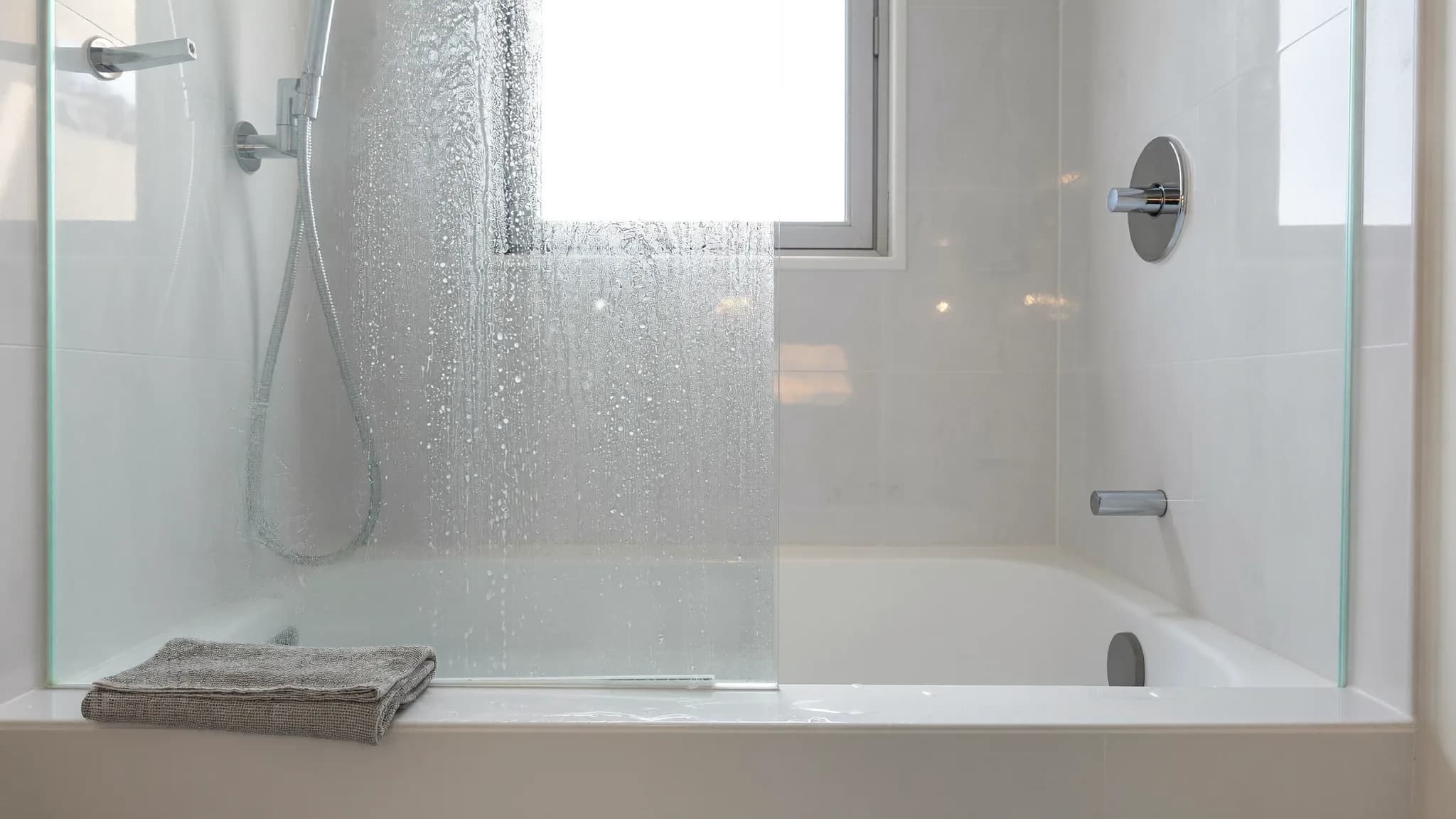
To remove hard water stains, use a cleaner made for lime or mineral deposits on a surface its label lists, work it in gently with a soft cloth or non-scratch pad, rinse, and dry the surface completely. In Las Vegas and Henderson, drying helps prevent new spots as hard water evaporates. If the buildup has gotten ahead of you, our deep cleaning service is a good reset.
Here’s how to remove hard water stains from shower glass, faucets, tile and toilets, what never to mix, and how to keep the spots from coming back.
Quick summary
- Las Vegas Valley water is “very hard”: 280 parts per million, or 16 grains per gallon, according to the Southern Nevada Water Authority (SNWA).
- The minerals behind the stains are calcium and magnesium. SNWA says the effects are “solely aesthetic” and don’t affect your health.
- Use a cleaner labeled for hard water, lime or mineral deposits, and only on the surfaces the label allows.
- Never mix cleaning products. Bleach plus an acid, such as vinegar, can create chlorine gas.
- Wiping surfaces dry is the best way to prevent new spots. SNWA notes that mineral residue only forms when water is allowed to evaporate.
Why does Las Vegas water leave stains?
Las Vegas tap water carries a high level of dissolved minerals, and those minerals stay behind when water dries on a surface. That chalky film on your faucet or cloudy haze on the shower door is mineral residue, not dirt.
SNWA explains that the two minerals causing our hard water are calcium and magnesium, carried into Lake Mead from the mineral-dense Colorado River. It rates local water at 280 parts per million, or 16 grains per gallon, which it categorizes as “very hard.”
The good news: SNWA says hard water “doesn’t compromise your drinking water.” The stains are a cleaning problem, not a health problem. The less good news is that they build up quickly, so a little regular attention saves a lot of scrubbing later.
What do you need to remove hard water stains?
You don’t need much: a mineral-dissolving cleaner, something gentle to scrub with, and something dry to finish. Most homes already have everything except the cleaner.
- A cleaner labeled for hard water, lime or mineral deposits
- Soft microfiber cloths
- A non-scratch scrub pad or soft-bristle brush
- An old toothbrush for faucet bases and edges
- A squeegee for shower glass
- Rubber gloves
- Good airflow: open a window or run the bathroom fan
Before you start, read the cleaner’s label. It will tell you which surfaces it is safe for, how long to leave it on and how to rinse it off. If you aren’t sure about a surface, check the fixture or surface maker’s care instructions before applying any product. Test a small hidden spot only after confirming the product is compatible.
How do you remove hard water stains from shower glass?
Shower glass shows hard water first, because it gets wet every day and often dries on its own. Work gently: the goal is to dissolve the mineral film, not scour the glass.
- Rinse the glass with warm water to loosen soap residue.
- Apply your mineral-dissolving cleaner to the stained area, following the label.
- Let it work for the time the label recommends.
- Scrub gently with a non-scratch pad, using small circles. Pay attention to the bottom edge and around the handle.
- Rinse well so no cleaner is left on the glass.
- Squeegee and dry with a microfiber cloth.
If the haze is still there, repeat the process rather than switching to something harsher, and use only scrubbers the glass maker approves.
For the rest of the room, our guide to deep cleaning a bathroom in Las Vegas walks through the full routine.
How do you clean hard water spots off faucets and fixtures?
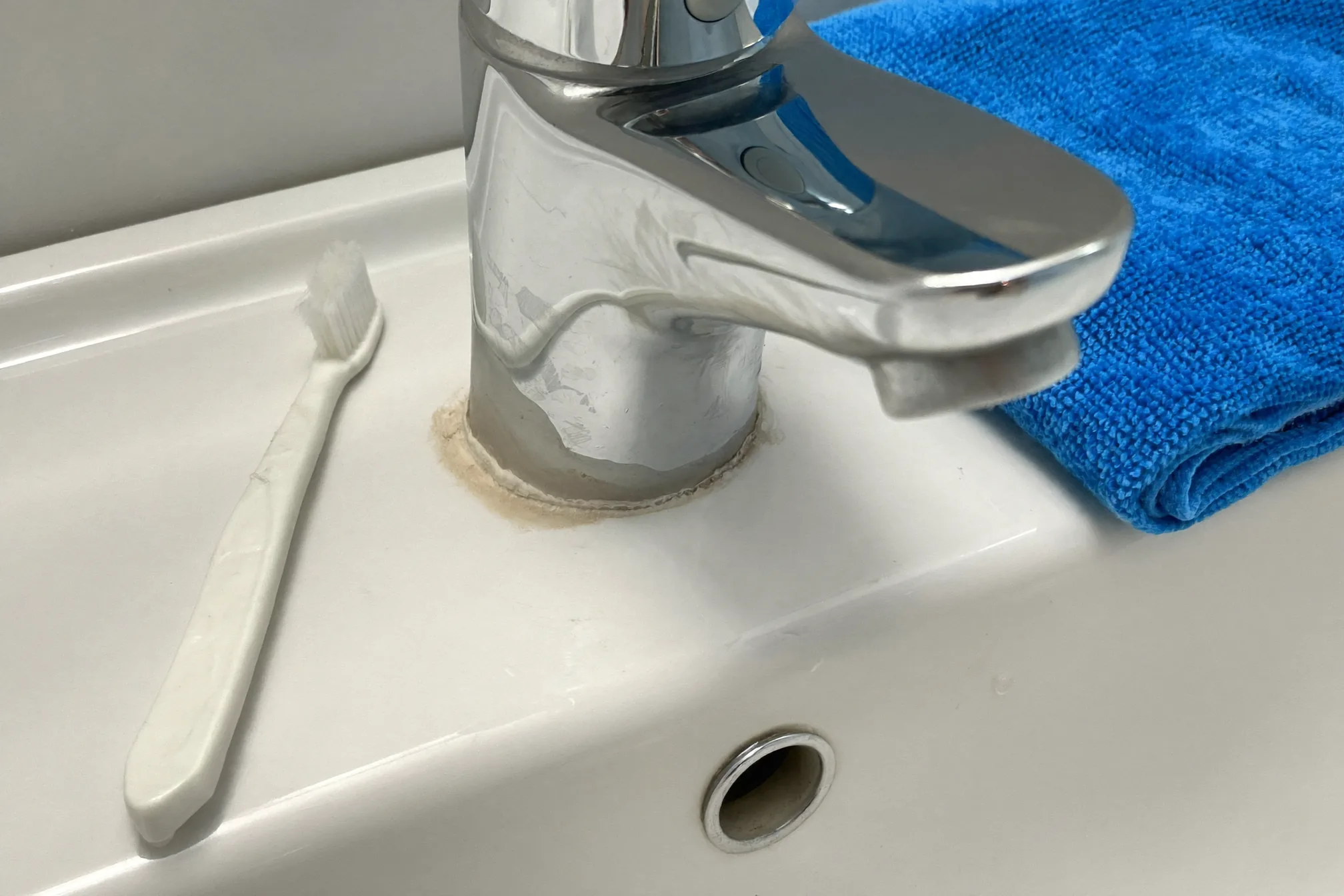
Faucets and showerheads collect white rings where water sits and dries. A cleaner labeled for the fixture’s finish, a toothbrush and a dry cloth handle most of it.
- Faucets: apply the cleaner to a cloth rather than spraying it straight on, then work around the base and spout with a toothbrush. Rinse and dry.
- Handles and drains: the same method works on handles and drain rings, where buildup hides in the edges.
- Showerheads: wipe the face clean, then use a toothbrush on the nozzles.
Polished, brushed and coated finishes can react differently to cleaners, so check the label and the fixture maker’s care instructions before you start.
How do you remove hard water stains from tile?
On tile, clean the stain without damaging the grout or the tile’s finish. Use a cleaner whose label lists your tile type, and scrub with a soft brush rather than anything abrasive.
- Wet the area with warm water.
- Apply the cleaner, keeping it on the stained area.
- Brush gently along the tile and grout lines.
- Rinse thoroughly, then dry with a towel.
Natural stone, such as marble or travertine, can need special care. Use only a cleaner whose label says it is safe for stone, and follow the stone’s care instructions.
How do you get rid of a hard water ring in the toilet?
A ring at the waterline is usually mineral buildup. Use a toilet bowl cleaner labeled for hard water or mineral stains, follow its directions, and scrub with a toilet brush.
- Apply the cleaner under the rim and along the ring.
- Leave it for the time the label recommends.
- Scrub the ring with the toilet brush, then flush.
- Repeat if needed rather than mixing in another product.
Which cleaning products should you never mix?
Never mix cleaning products with each other. CDC guidance warns against combining bleach or disinfectants with any other cleaner because dangerous vapors can result. Follow the label, provide fresh air, and use the protective equipment it specifies. The Alabama Department of Public Health explains these common combinations:
- Bleach and acids, such as vinegar or lemon juice, can create chlorine gas, which can irritate and damage the eyes, skin and respiratory system.
- Bleach and ammonia create a toxic chloramine gas.
- Hydrogen peroxide and vinegar should not be mixed either.
Never use a hard water cleaner together with or right after a bleach product. Use one product for the task and follow its label.
Want help choosing the right cleaning scope? Get an Instant Quote and tell us which surfaces need attention.
How do you keep hard water stains from coming back?
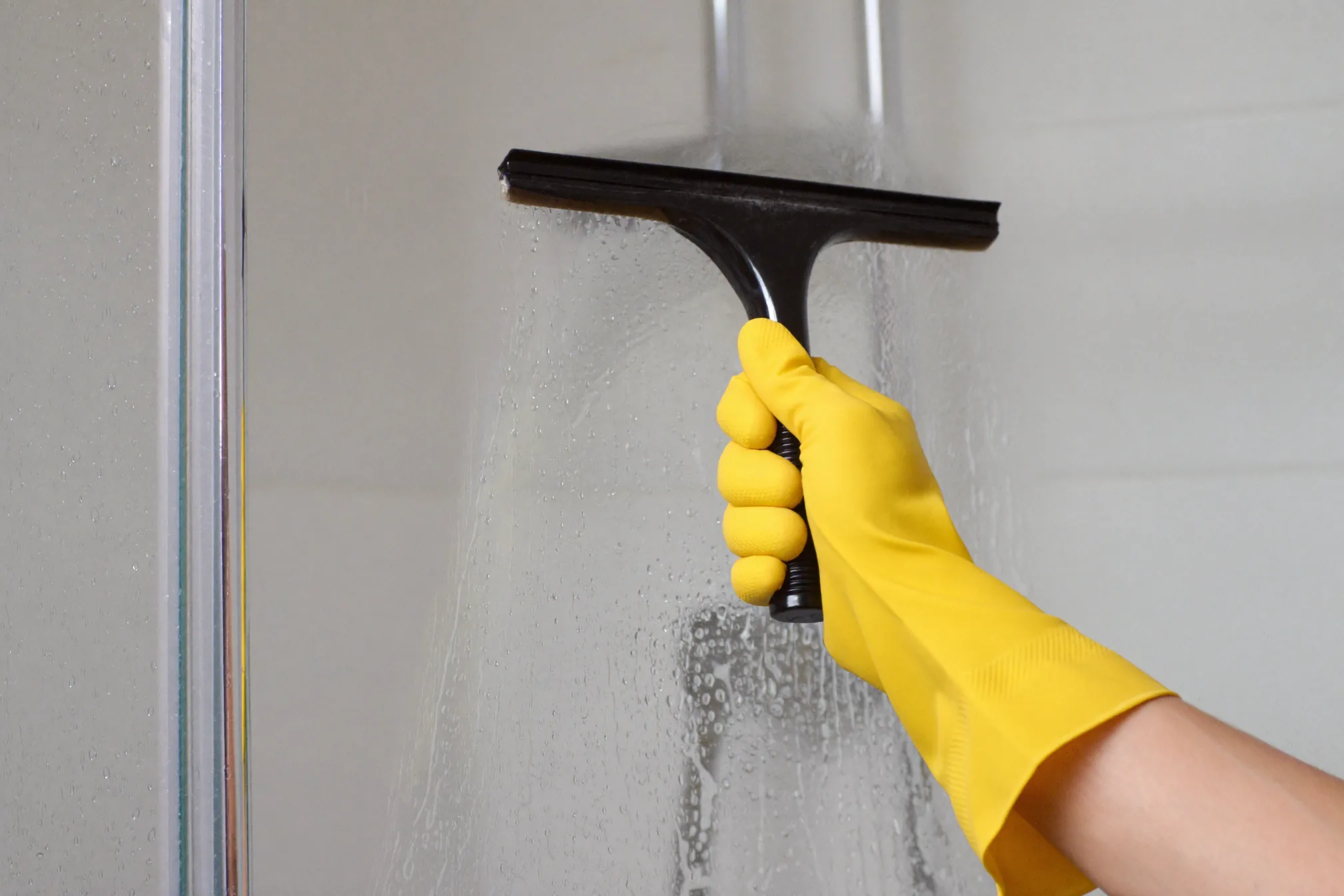
The simplest prevention is to dry surfaces after they get wet. SNWA says deposits on fixtures and countertops can be prevented by wiping surfaces dry, because mineral residue only occurs when water is allowed to evaporate.
- Squeegee the shower glass after each shower.
- Wipe faucets dry after washing up.
- Keep a microfiber cloth in the bathroom and by the kitchen sink.
- Use a dishwasher rinse aid to help with spots on glassware. SNWA lists rinse aids among the ways to reduce hard water problems.
- Consider a household water softener. SNWA also lists water softener systems as an option. Talk to a licensed plumber or water treatment professional about what fits your home.
For a broader routine that also covers desert dust, see our plan for desert dust and hard water in Las Vegas homes.
When should you call a professional cleaner?
Call a professional when buildup has spread across several rooms, keeps coming back, or you simply don’t have the time. A thorough clean gives you a fresh starting point that is easier to keep up.
Our cleaning checklist separates standard cleaning from deep cleaning. The Standard tab lists “Gently Scrub Shower Glass,” with the qualifier “if applicable, extra detail included.” The Deep Cleaning tab lists “Deep Scrub Shower Glass & Tracks,” with “hard water deposits removed” in parentheses. It also lists “Deep Clean Countertops & Faucets,” with “mineral buildup removed” in parentheses. Actual scope may vary based on home condition, so choose the service tab and discuss your surfaces before booking.
If your kitchen fixtures need attention too, our guide to deep cleaning your kitchen in Las Vegas covers sinks and faucets alongside the rest of the room.
Frequently asked questions
Is hard water bad for your health?
According to SNWA, no. It says the calcium and magnesium in Las Vegas Valley water are nontoxic, do not pose a health risk, and that the effects of hard water are solely aesthetic.
Can I use vinegar and bleach together to remove hard water stains?
No. Never mix bleach with vinegar or any other acid. The Alabama Department of Public Health warns that the combination can create chlorine gas. Use one product at a time and follow its label.
Why do hard water spots come back so fast in Las Vegas?
Our water is very hard, and mineral residue forms every time water dries on a surface. Wiping fixtures and glass dry after use is the best way to slow the buildup.
Will a water softener stop hard water stains?
SNWA lists household water softener systems as one way to reduce hard water problems. A licensed plumber or water treatment professional can tell you whether one makes sense for your home.
Ready for sparkling glass and fixtures?
Need help with shower glass and fixtures? Discuss your surfaces and buildup with Ladybug Cleaning Co. Get an Instant Quote or call (702) 287-7474.
Sources
- CDC, “Cleaning and Disinfecting with Bleach”: https://www.cdc.gov/hygiene/about/cleaning-and-disinfecting-with-bleach.html
- Southern Nevada Water Authority, “Water quality FAQs” (hard water and regulations sections): https://www.snwa.com/water-quality/facts/index.html
- Alabama Department of Public Health, “Don’t Mix Household Chemicals” (October 2025): https://www.alabamapublichealth.gov/blog/2025/10/chemicals.html
- Ladybug Cleaning Co., “Our Cleaning Checklist”: https://www.ladybugcleaningco.com/checklist
Related guides
- how to remove hard water stains
- Las Vegas homes
- hard water cleaning